|
Subject:Re: kyoto temple legends
Posted By: I.Nagy Sat, Sep 19, 2026
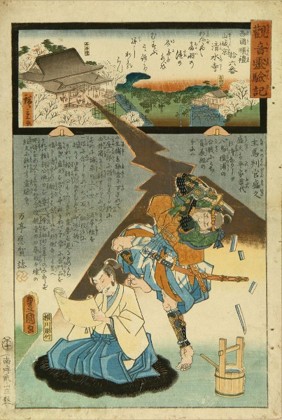
Pic.1,
觀音靈驗記 Kannon's Miraculous Tales
西國順禮 Pilgrimage to Western Japan
拾六番 No. 16
山城京 清水寺 Yamashiro-kyo, Kiyomizu-dera Temple
Summary of the inscription,
Morihisa, a hereditary vassal of the Heike clan, was captured by Yoshitsune after the Battle of Dan-no-ura and sent to Kamakura under the custody of Tsuchiya Saburō.
When he was about to be executed at Yui-no-hama, he fervently prayed to the Lotus Sutra. Miraculously, the executioner's sword snapped in pieces.
Hearing of this—and having had a strange, prophetic dream himself—Minamoto no Yoritomo summoned Morihisa. Morihisa explained that he had long devoted himself to the Kannon Sutra and prayed to the Kiyomizu Kannon. Impressed by this divine power, Yoritomo not only spared his life but also granted him an estate.
This miraculous event perfectly reflects the sutra passage: "By invoking the power of Kannon, the sword shall break into pieces."
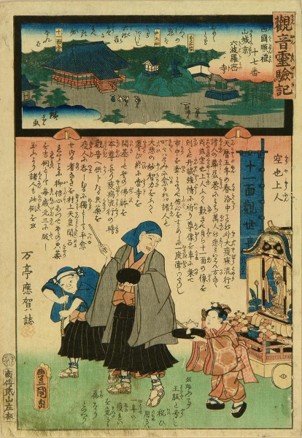
Pic.2,
觀音靈驗記 Kannon's Miraculous Tales
西國順禮 Pilgrimage to Western Japan
第十七番 N.17
山城京 六波羅密寺 Rokuharamitsu-ji Temple
Summary of the inscription,
Venerable Kūya
During a severe plague in Kyōto in the spring of the 5th Year of Tenryaku (951), Venerable Kūya carved an Eleven-Faced Kannon statue, placed it on a cart, and paraded it through the city while praying. Wherever it passed, people were healed. Deeply moved, the citizens founded Rokuharamitsu-ji Temple to enshrine the statue. He also offered medicinal tea dedicated to Kannon to the sick, curing everyone who drank it. Emperor Murakami adopted this practice, drinking it every New Year's Day. Following his lead, people began calling the custom "Ōbuku" to pray for good health and protection from illness throughout the year.
Regards,
I.Nagy


|
 ( China & Japan ) - francis minvielle - Sep 18, 2026 (12:21 AM)