|
Subject:Re: Original Artwork
Posted By: I.Nagy Thu, Sep 10, 2026
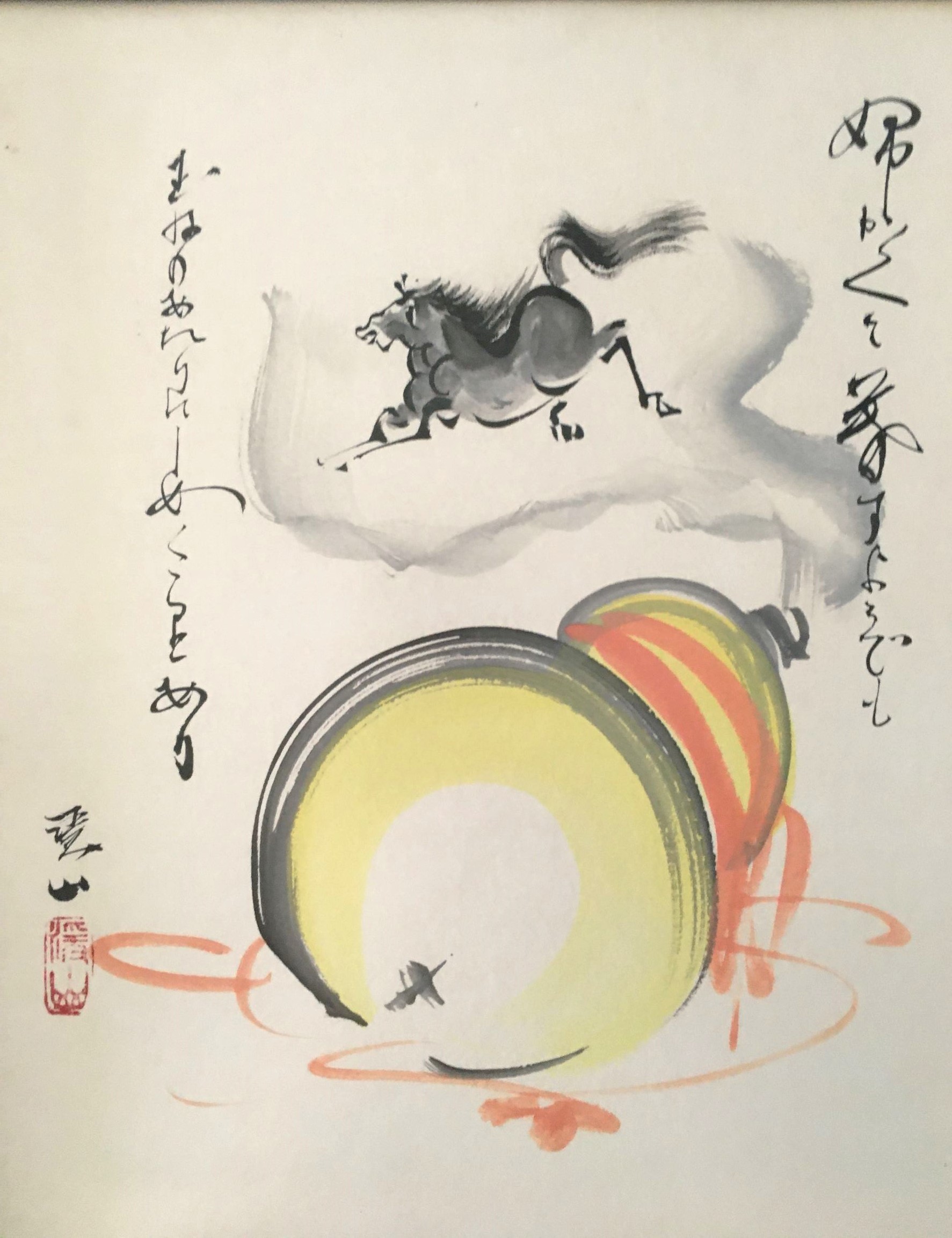
I recommend the examination under a magnifying glass : If you observe “ink or paint seeping into the paper due to capillary action” or “the three-dimensional texture of the brushstrokes (paint thickness),” it is highly likely that the artwork is a hand-painted original. On the other hand, if you see a pattern of regular, fine dots when magnified, the artwork is a reproduction created using printing techniques.
Inscriptions,
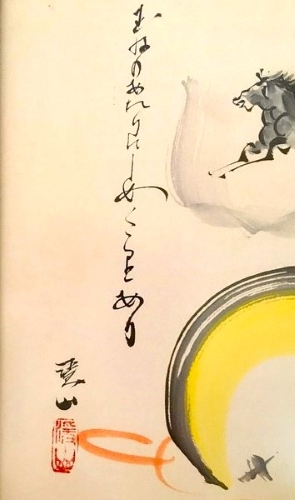
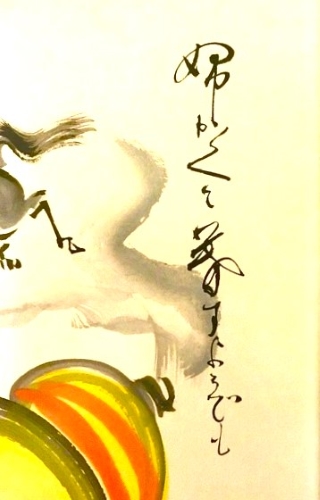
ふかく暮らすようでも
むねのあたりにしめくくりあり
Fuka fuka to kurasu yōdemo
mune no atari ni shimekukuri ari
Even though it may seem like I’m living a carefree life, there’s a sense of closure deep within my heart.
Signature and seal read、
湲山 Kanzan
Art-name of an unidentifiable Japanese artist.
It is undated, but based on the archaic kana script use, it can be assumed to date it from the late 19th century to the mid-20th century.
Note, for technical reasons alternative kanas are transcribed to their modern forms.
With regards,
I.Nagy
|
 ( China & Japan ) - Ina - Sep 09, 2026 (08:02 AM)