Asianart.com | Associations | Articles | Exhibitions | Galleries


Visitors' Forum

Asian Art  Forums - Detail List
Asian Art Forums

Message Listing by Date:
Message Index | Back | Post a New Message | Search | Private Mail | FAQ
Subject:Blind reading request: inscription and two seals on bird-and-fruit silk painting
Posted By: Daphne K Fri, Sep 04, 2026 IP: 108.48.193.164

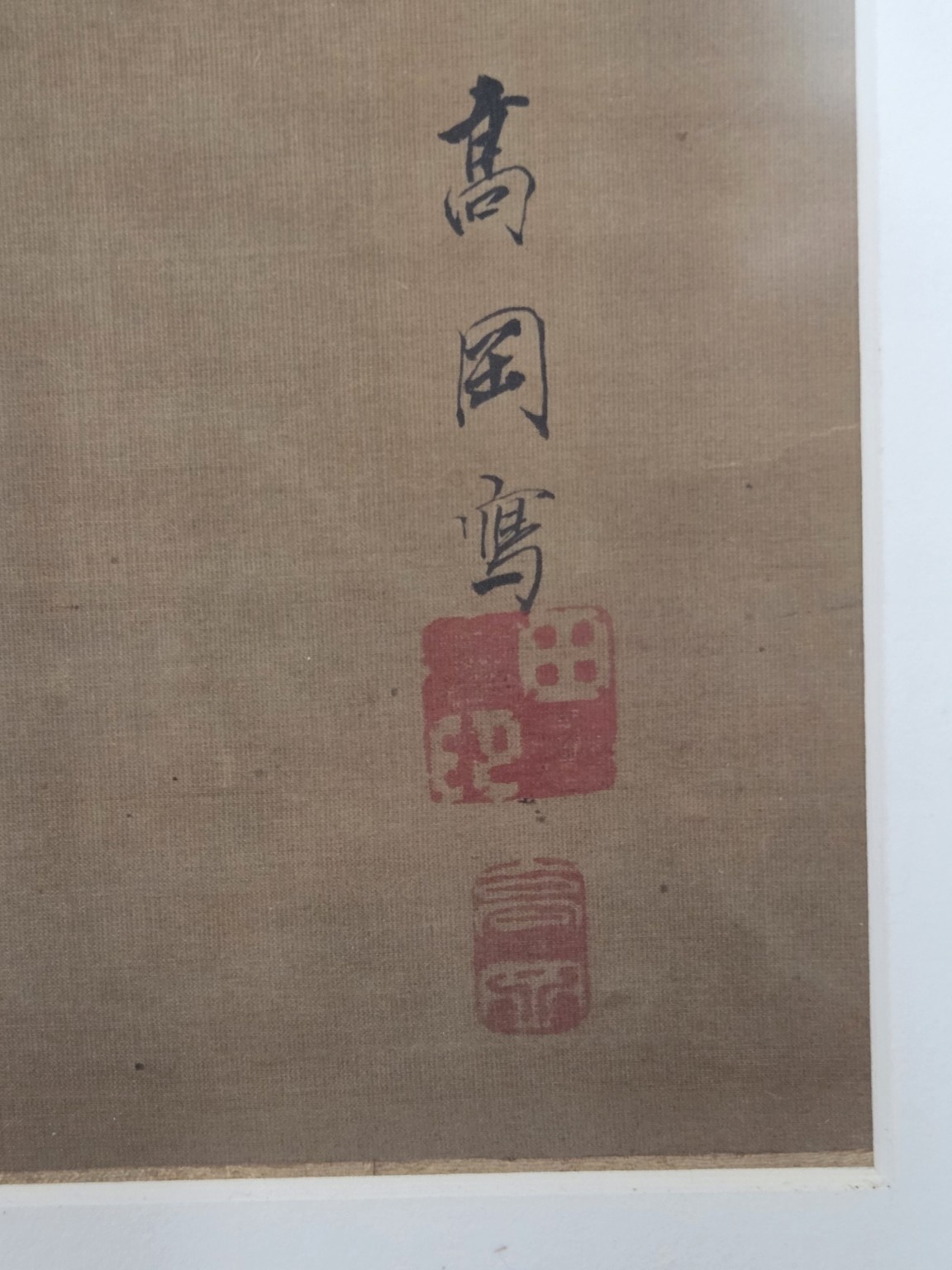
I am researching an East Asian bird-and-fruit painting on a fine woven support, probably silk. It has a short brush inscription and two worn red seals.
I am seeking an independent transcription of the marks, not an appraisal or authentication.
Could someone please provide:
the ordinary modern characters they believe are present;
the likely Chinese and/or Japanese pronunciation in roman letters;
a plain-English meaning;
any plausible alternative reading;
an approximate confidence level; and
any published artist-seal or signature reference that supports the reading?
I do not read Chinese or Japanese, so I would be grateful if any characters could also be explained in English.
I have deliberately omitted previous proposed readings so that responses are not influenced by them. The photographs were taken through glazing, and both seal impressions are worn and incomplete. An opinion that either seal is not reliably readable would also be useful.
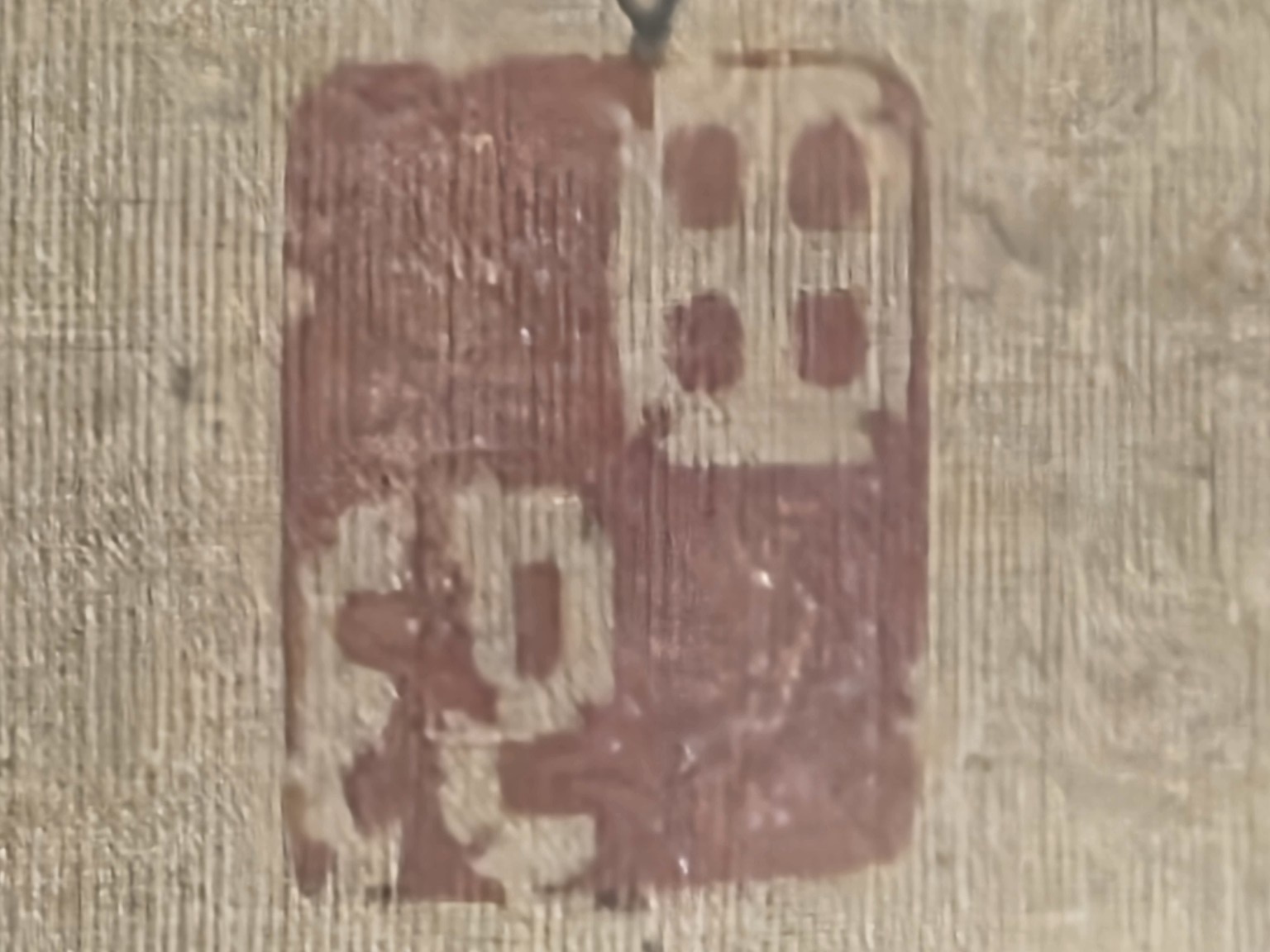
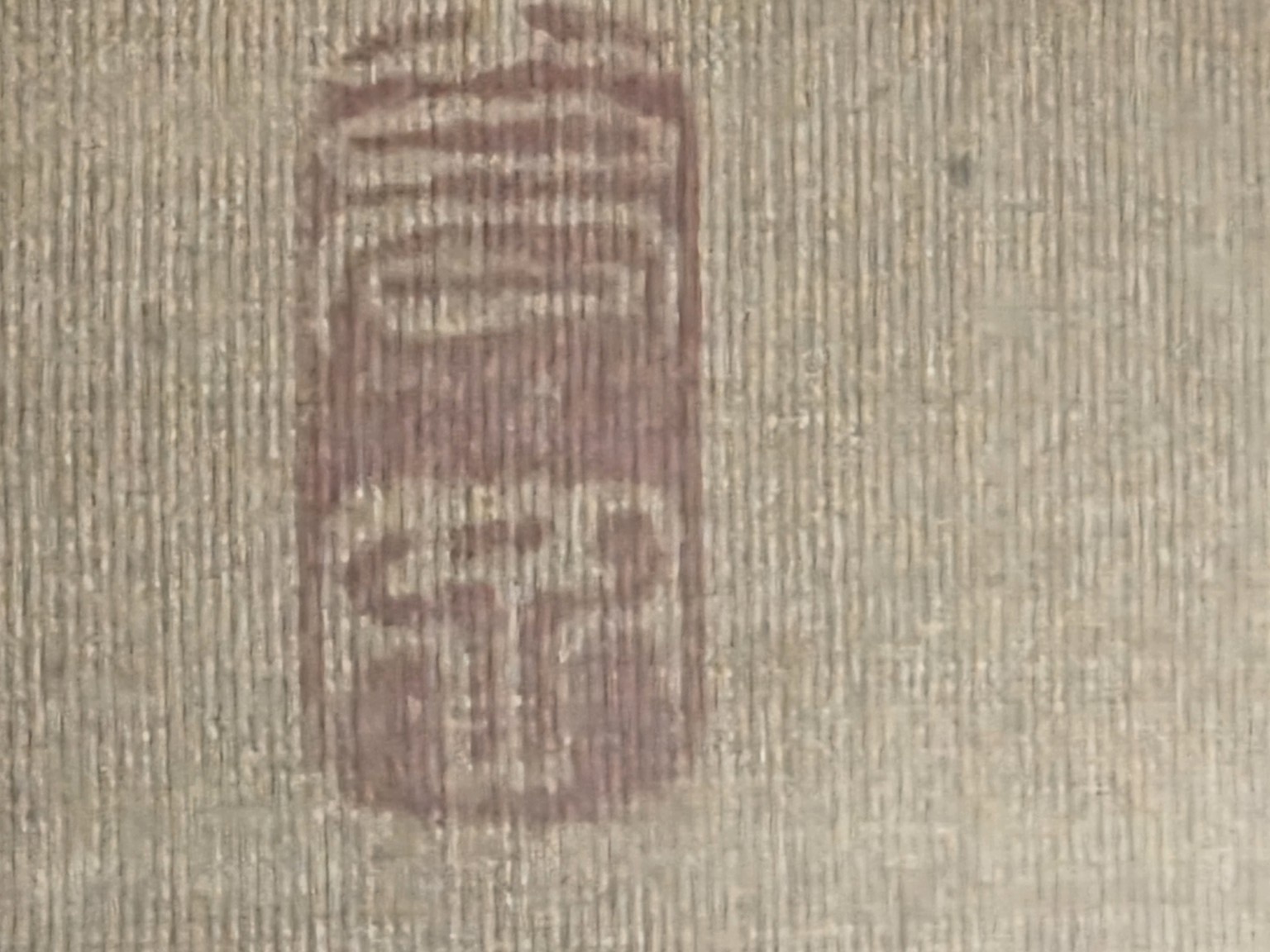
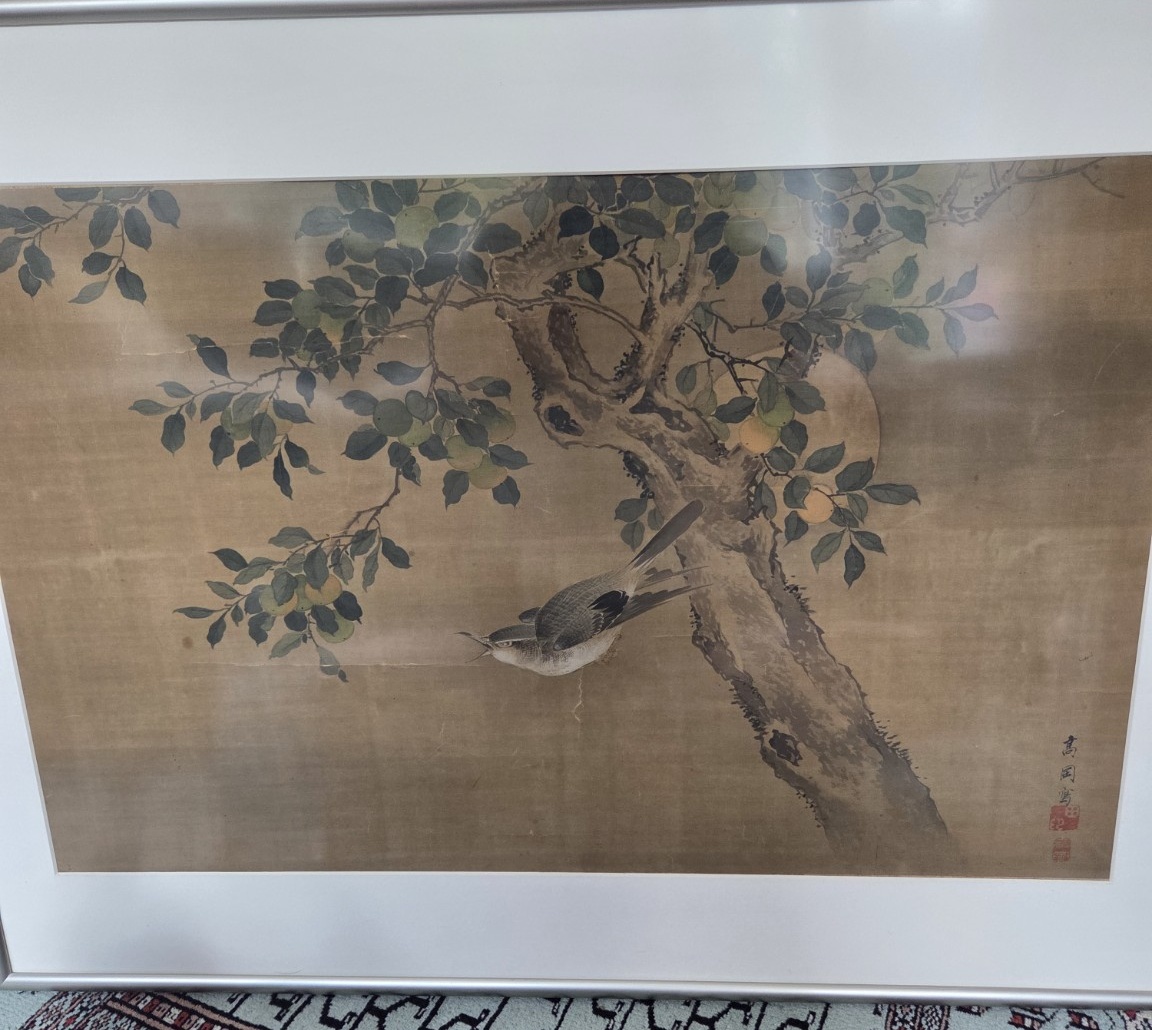
The first photograph shows the inscription and both seals in context. The second and third photographs are closer views of the two seals. I will add a full view of the painting in a follow-up reply because the initial post permits only three images.
Thank you very much for any help.


Subject:Re: Blind reading request: inscription and two seals on bird-and-fruit silk painting
Posted By: I.Nagy Sat, Sep 05, 2026

Based on the picture of the signature and seals you provided, I can tell that this is a name of a Japanese artist,
Signature,
高岡寫 Takaoka-sha
“Takaoka” is the artist's surname. “寫 (sha)” means “to draw,” and when written at the end of a painting, it signifies that “Takaoka drew (or painted) this.”
Upper seal,
田印 Den-in
It is believed that this seal derives from the artist’s given name or his pseudonym, “Den”
Lower seal,
高岡 Takaoka
(It matches the signature "Takaoka")

Perhaps the full image or additional inscriptions could help identify the artist.

With regards,
I.Nagy

Subject:Re: Blind reading request: inscription and two seals on bird-and-fruit silk painting
Posted By: Daphne K Sat, Sep 05, 2026

Full view of the painting for context. I am primarily seeking a blind reading of the inscription and seals rather than an attribution based on the overall image.


Subject:Re: Blind reading request: inscription and two seals on bird-and-fruit silk painting
Posted By: mikeoz Sat, Sep 05, 2026

My suggestion:

Chinese: Possible artist's name. Tian GaoGang

Signature: GaoGang Xie 高岡寫 Written by GaoGang

Firat seal. Tian Yin 田印. Tian's seal

Second seal: Given name GaoGang 高岡

Subject:Re: Blind reading request: inscription and two seals on bird-and-fruit silk painting
Posted By: I.Nagy Sun, Sep 06, 2026

Based on the full image, it is highly likely that this is a Japanese painting (such as Nihonga or literati painting), - judging by the painting medium (silk),the technique using light colors etc. the soft lines and refined brushwork reveal a delicate, soft quality characteristic of Japanese art.
Since Eastern painting techniques were transmitted from China to Japan, there are many commonalities between them.

As a theoretical possibility, I wouldn't completely rule out the variation “Tián Gāogāng” (surname and given name) from China. The “Tian” surname is fine, but in the Gāogāng the two characters are pronounnced exactly the same tone level, which lacks the rythm and undulation that a name should have, therefore it is not realistic.
However, Gāogāng (High Ridge) as an art-name is certainly possible.
Currently there is no known Chinese painter with Surname Tián and given name or art-name Gāogāng in publicly available Chinese sources.
With regards,
I.Nagy

Subject:Re: Blind reading request: inscription and two seals on bird-and-fruit silk painting
Posted By: Daphne K Sun, Sep 06, 2026

Thank you so much, I.Nagy and mikeoz. I am really grateful to both of you for taking the time to examine these difficult, worn marks.
May I ask just one small follow-up about the upper square seal? Could it possibly contain four characters rather than only 田印, with 田 (“Tian/field”) in the upper-right area and 印 (“seal”) in the lower-left, leaving two very worn characters in the other areas? Or does the surviving impression look clearly like a two-character seal to you?
Please do not feel any need to speculate beyond what is visible—knowing that it is too worn to determine would also be very helpful. Thank you again.

Subject:Re: Blind reading request: inscription and two seals on bird-and-fruit silk painting
Posted By: mikeoz Sun, Sep 06, 2026

Now I've seen the painting, I agree it is Japanese and defer to Master I Nagy for his transliterations.

As far as the possibility that the 田印 seal might contain additional characters, if you look closely at the scratchy marks you will see that they are the same as the weave of the fabric. Not additional characters.

Nice painting.

Subject:Re: Blind reading request: inscription and two seals on bird-and-fruit silk painting
Posted By: Daphne K Thu, Sep 10, 2026

Thank you both very much — this has clarified the marks much more than I had hoped. I.Nagy, thank you especially for your initial reading of 高岡寫 as Takaoka-sha, identifying Takaoka as the surname, and for your interpretation of 田印 (Den-in) as likely deriving from a given name or pseudonym “Den.” And mikeoz, thank you for confirming that the apparent additional marks in the upper seal are consistent with the textile weave rather than additional characters.


Since you both now favor a Japanese origin after seeing the full painting, may I ask whether either of you recognizes a Japanese painter surnamed Takaoka who used Den as a given name or art name, or can suggest a Japanese artist/signature reference in which I might search that combination? I would also be grateful for any thoughts on approximate period or school, though I understand that may not be possible from photographs.


Many thanks again for your time and expertise. This has been a real joy for me.


Asianart.com | Associations | Articles | Exhibitions | Galleries |