|
Subject:Re: "Onyx"
Posted By: Beadman Tue, Aug 11, 2009
Hi Sam,
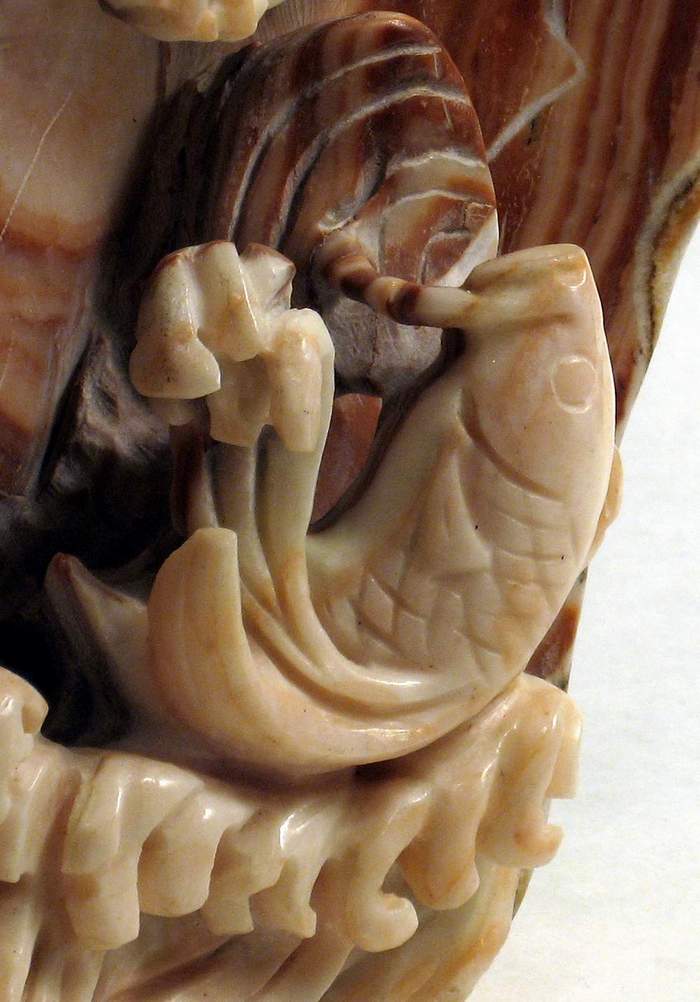
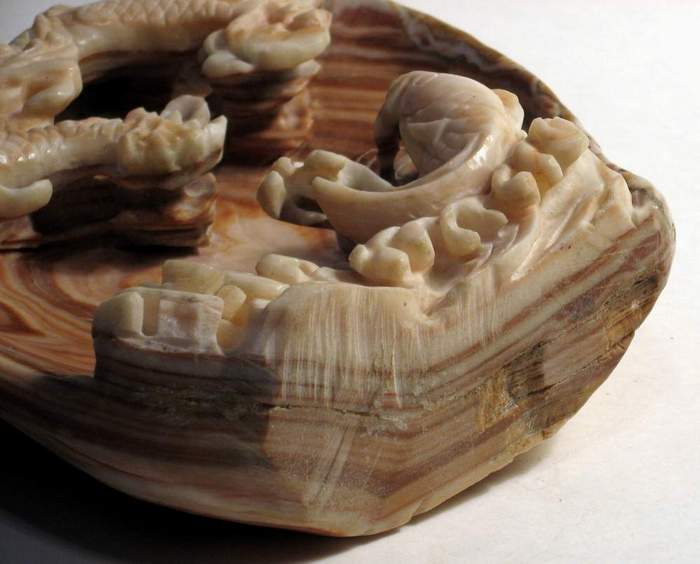
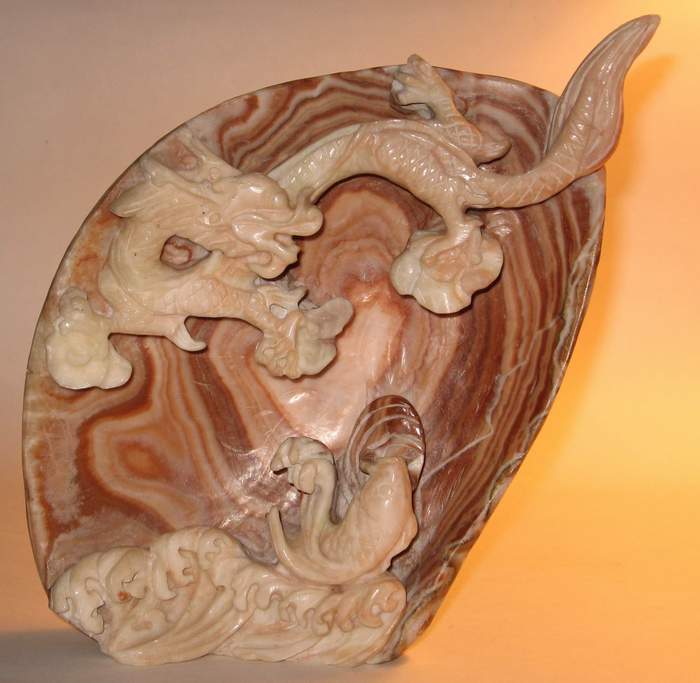
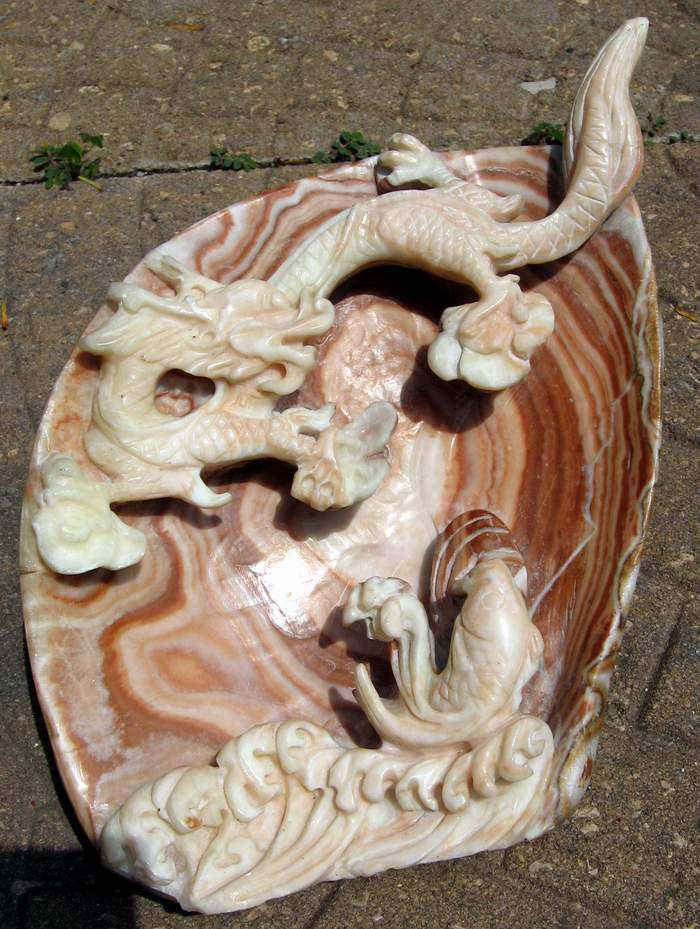
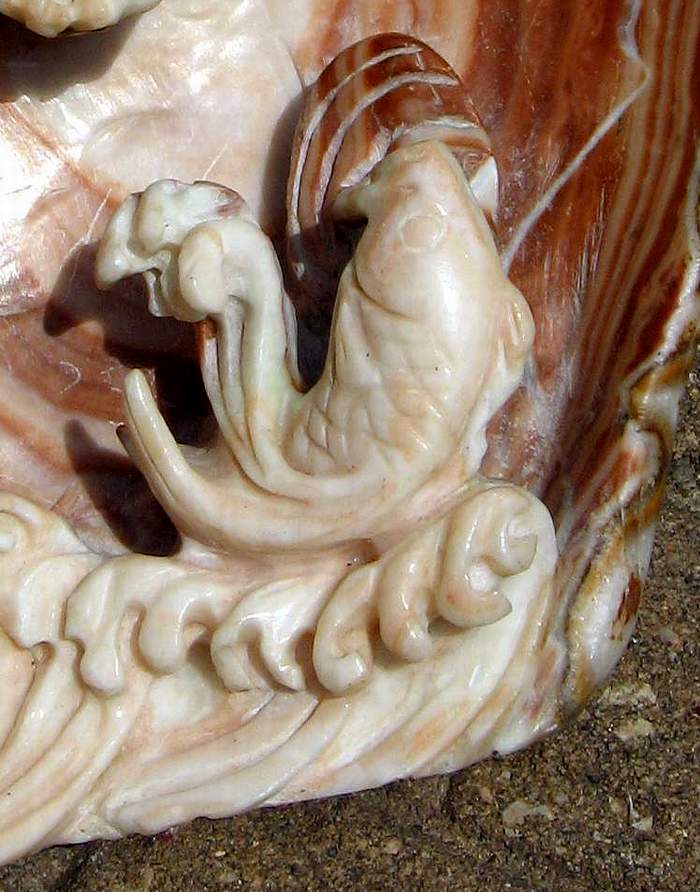
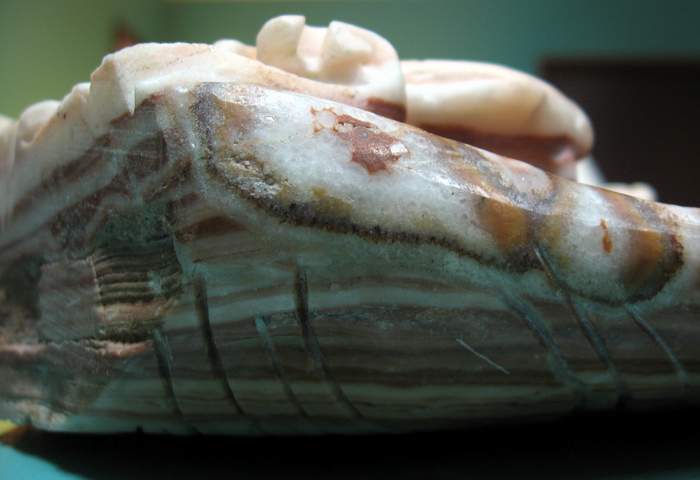
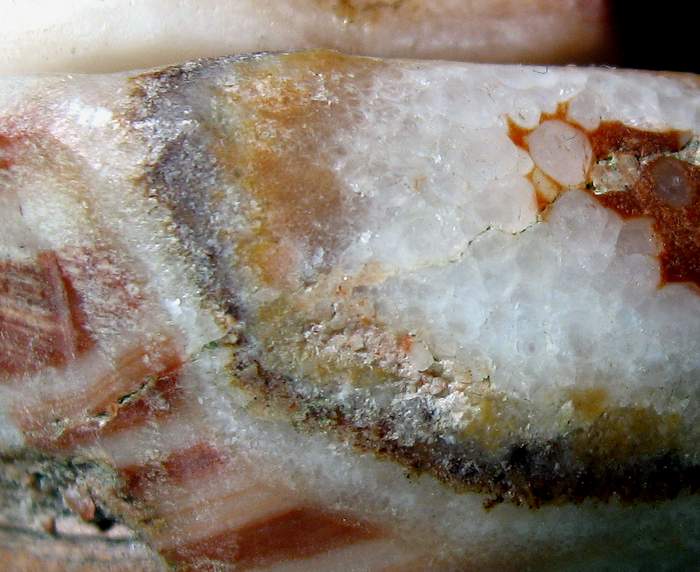
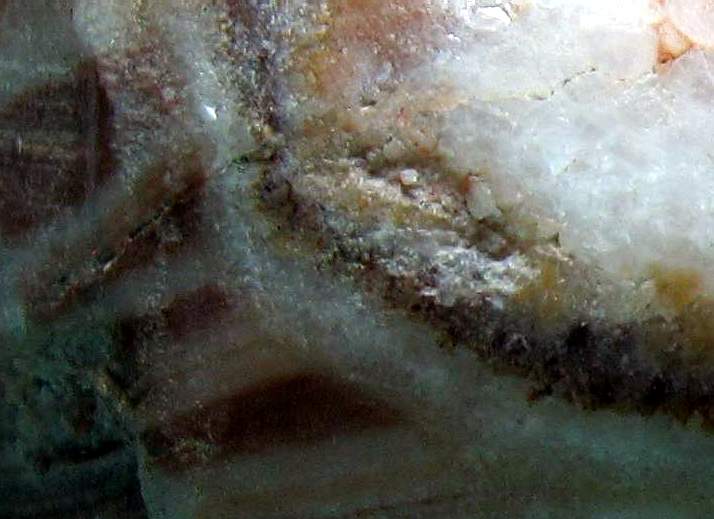
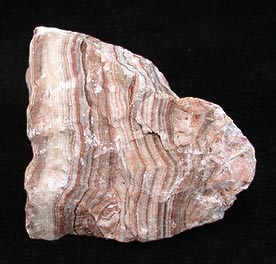
Your tone is beginning to sound a bit bent-out-of-shape! Can you not accept that we disagree, in-part, on this matter? Your points are taken, as far as they go—and I largely do not disagree. But the convention of calling banded calcite or marble "onyx" is so ingrained and encompassing so long a time, to argue against it is sort of ridiculous. Are all those museums and auction houses going to change their identifications? Probably not.
Your new citations also leave a lot to be desired. One cites "Mexican onyx" itself. And, by the way, Mexican onyx is frequently dyed (and I mean "dyed"), and called "Méxican jade" (!). But this doesn't mean anyone is suposed to believe this stuff is "jade." The naming of stones is complicated and OFTEN misleading, controversial, or incorrect. About which....
The problems with naming jades are considerably more complicated than just saying "serpentine is not jade." It's NOT "jade"..., but it is "yu"—and yu is jade (in China).
"This name is often erroneously applied to the alabaster, calcite and aragonite used in the manufacture of souvenirs and other ornamental objects sold throughout the tourist centres of the Mediterranean. True onyx is simply a black and white banded variety of quartz allied to agate. These bands being straight and parallel, onyx is sometimes known as 'zebra agate' or, if the stone is completely black, 'black agate'. During the 1950s it was very popular as a stone for men's signet rings. It is now used for intaglios and cameos, necklaces and small pieces of jewelry.
It has a very wide provenance, being found wherever there is quartz."
This is just silly! The black onyx of commerce is manufactured at Idar-Oberstein, and has been for over 100 years. It is artificially-colored Brazilian agate. There is practically NO "natural" black agate from any producer on a commercial scale. The Germans export this material world-wide. The amount of artificially-produced black agate (which is NOT "dyed") must considerably surpass any "natural" black agate. In recent years, Chinese lapidaries also produce it, and must now seriously compete with Germany.
"The chief localities of onyx are India and South America."
This is only true if we include the artificial coloring of Brazilian agate to become "onyx"—(as I remarked) that is in the hands of Germans, perhaps some Brazilians (as of about 20 years ago), and Chinese manufacturers (as of about eight years ago). That India has artificially-colored agates brown and black (via soaking the material in a sugar solution, and then burning it) is undisputed. It's well known this has occurred for at least 2000 years and longer—by the billions of beads found in the antiquities and contemporary marketplaces. They also create carnelian via heat-treating local agate (that is naturally impregnated with iron impurities)—and have done so for ca. 5,000 years.
"2. (not used technically) an unbanded chalcedony dyed for ornamental purposes."
This is an extremely common mistake! The artificial coloring of agate, as pioneered by Germans in the 19th C., is not "dying" (with the exception of two specific colors—pink and violet). The process does not use dyes, but rather mineral oxides—thereby copying the processes or nature. The results are permanent—whereas dying a stone is a superficial and temporary treatment. Although there are cheap dyed stones in popular commerce, these should not be confused with the high-quality manufacture of semi-precious stones. Without these materials, there would be almost NO carnelian (apart from that of India) on a commercial scale. Likewise, other typical colors, such as brown, black, green, yellow, and blue. Germans refer to these treatments as "beizen"—a name that is difficult to translate effectively, but that essentially means "steeped in acid." For instance, cucumbers are made into pickles, and cow hide into leather by being "beizen." A great deal of this material is not "unbanded," but rather forms the banded agate or onyx of typical world-wide commerce.
The popular and condensed literature you cite is part of the problem. In abreviating this information, the authors compound mistakes—such as mistakes about "dying" minerals.
Jamey


|
 ( China & Japan ) - Michael - May 30, 2009 (08:16 PM)